The Great Doorbell Crisis of 2026
A cautionary tale about modern communication, personal responsibility, and the revolutionary invention known as “walking to the front door.”
There once was a grown adult sitting in a car outside a house.
Beep.
Wait.
Beep.
Wait longer.
Beep.
No one appeared.
This was deeply concerning.
Not concerning enough to get out of the car, mind you.
But concerning.
A crisis was clearly unfolding.
The possibilities were endless:
Had everyone inside vanished?
Had the house been swallowed by a sinkhole?
Had aliens abducted the occupants?
Had society collapsed in the three minutes since arrival?
Nobody could know.
Certainly not the person sitting ten feet away from an unlocked front door.
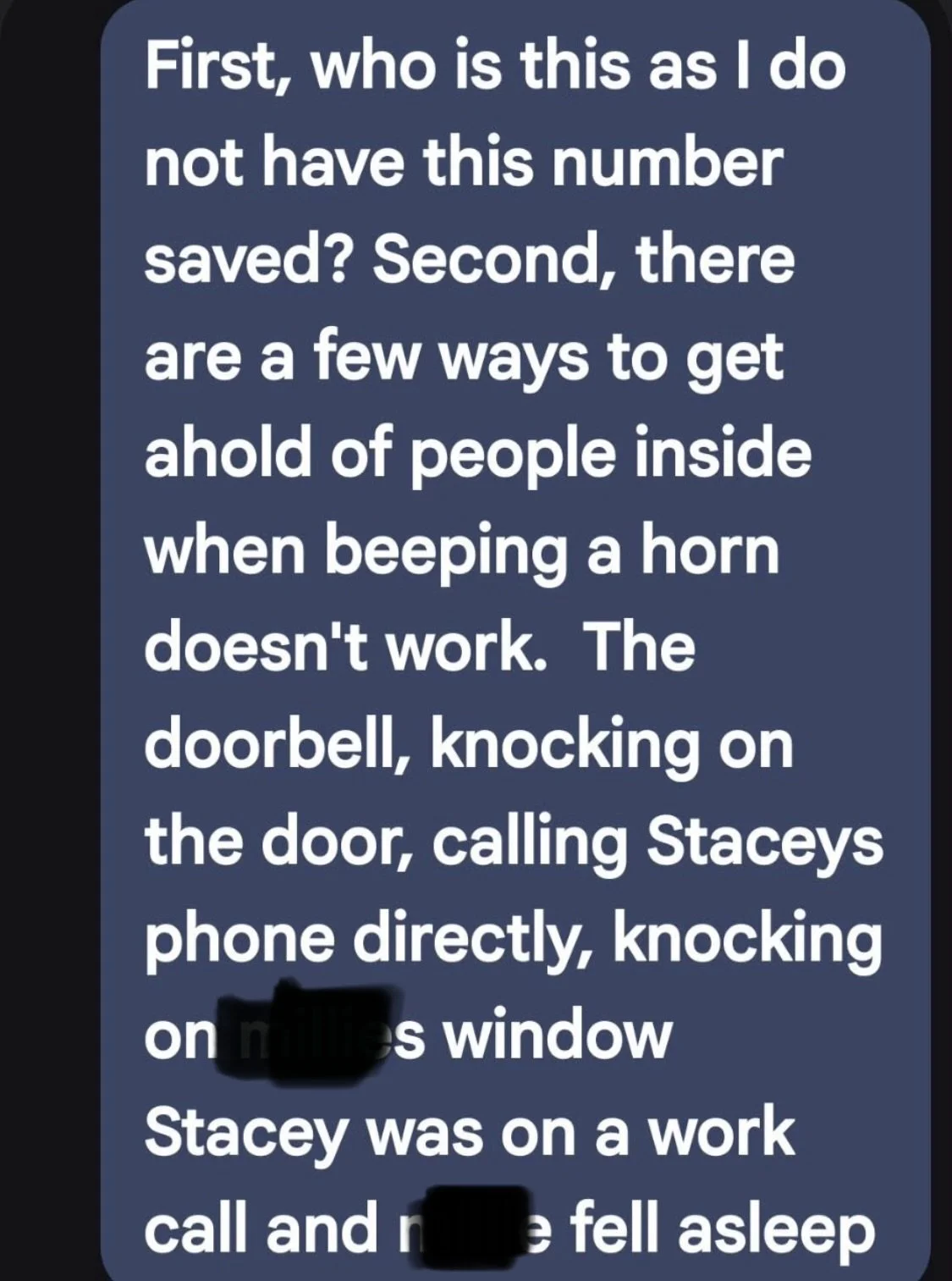
Now, some cynics might suggest there were alternative methods of communication available.
For example:
Ringing the doorbell.
Knocking on the door.
Calling someone.
Sending a text message.
Walking inside the home of your father, where you are welcome to enter.
Opening the unlocked door and yelling, “Amelia?”
But those are radical solutions.
Instead, the appropriate response was apparently:
Beep.
Wait.
Beep.
Become upset.
Beep.
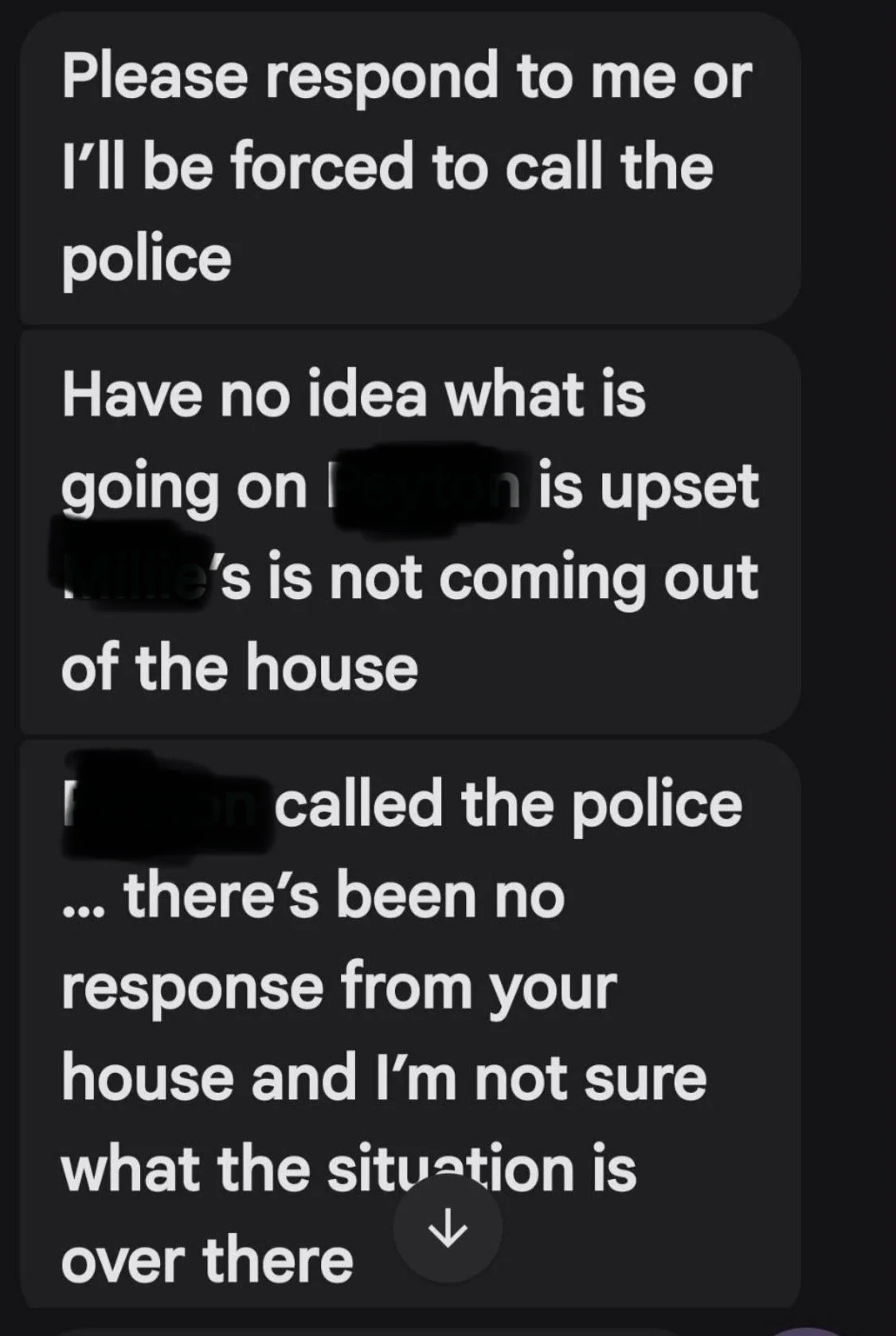
Threaten police involvement.
Because when a horn doesn’t produce immediate results, the next logical step is law enforcement.
As everyone knows, police officers routinely respond to emergency situations involving unanswered car horns.
“911, what’s your emergency?”
“Nobody came outside when I beeped.”
“Units are en route.”
Soon, the situation evolved.
The lack of response to the horn transformed from a minor inconvenience into a full-scale family emergency.
Texts began flying.
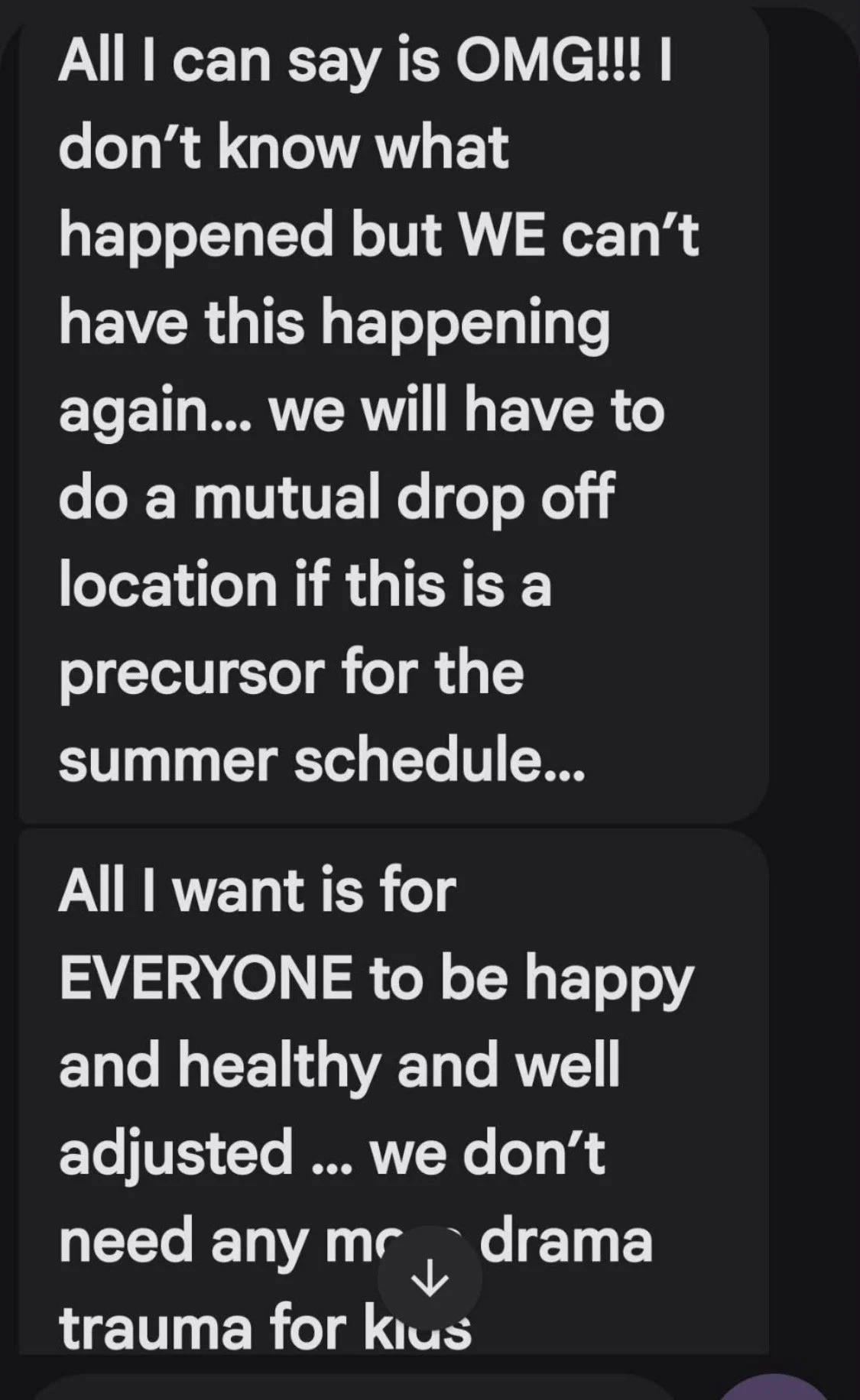
Children became involved.
The narrative expanded.
Feelings became facts.
Assumptions became evidence.
The crisis grew larger and larger despite being entirely avoidable by pressing a doorbell button.
Then came my favorite part.
The solution proposed for this self-created emergency:
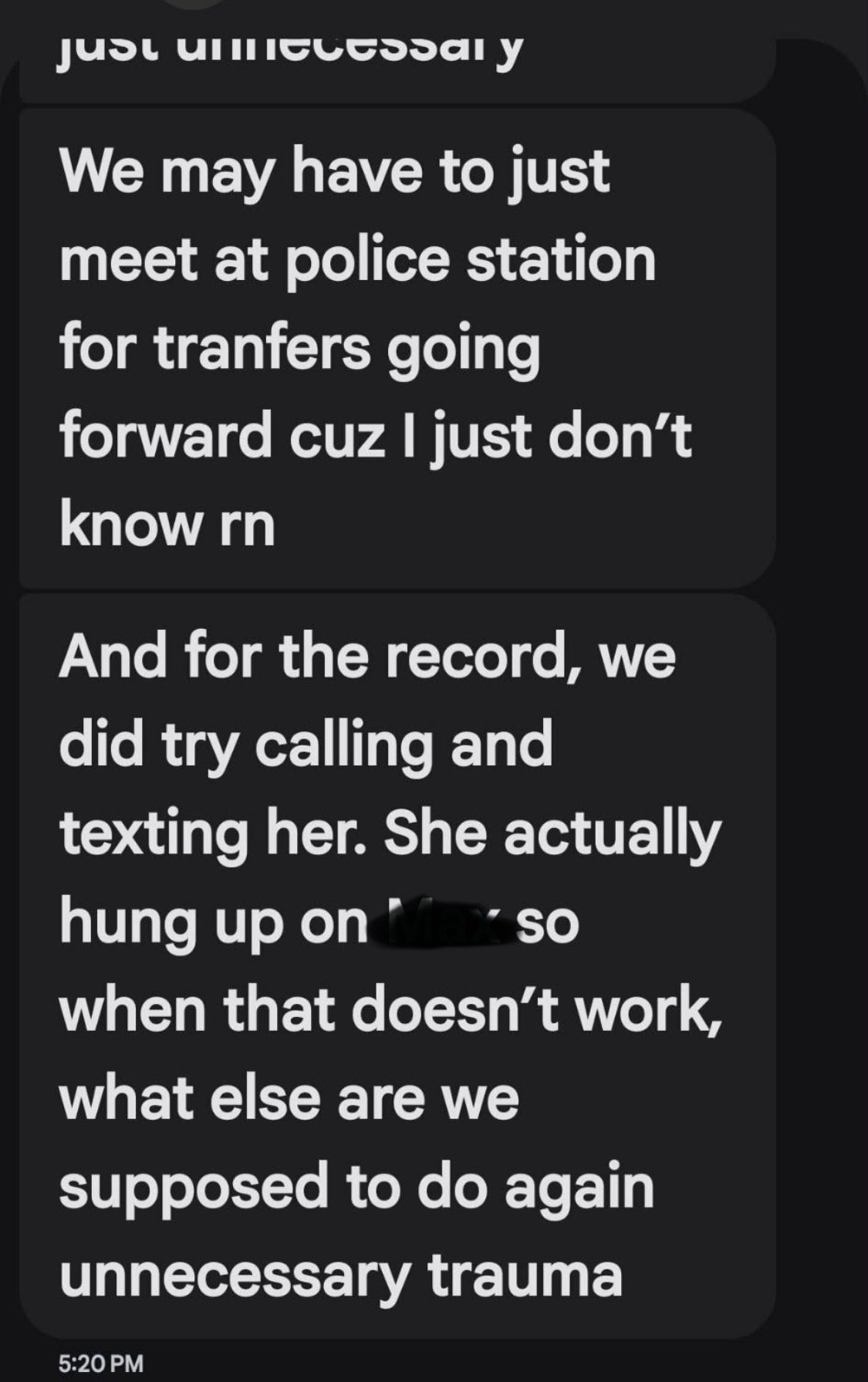
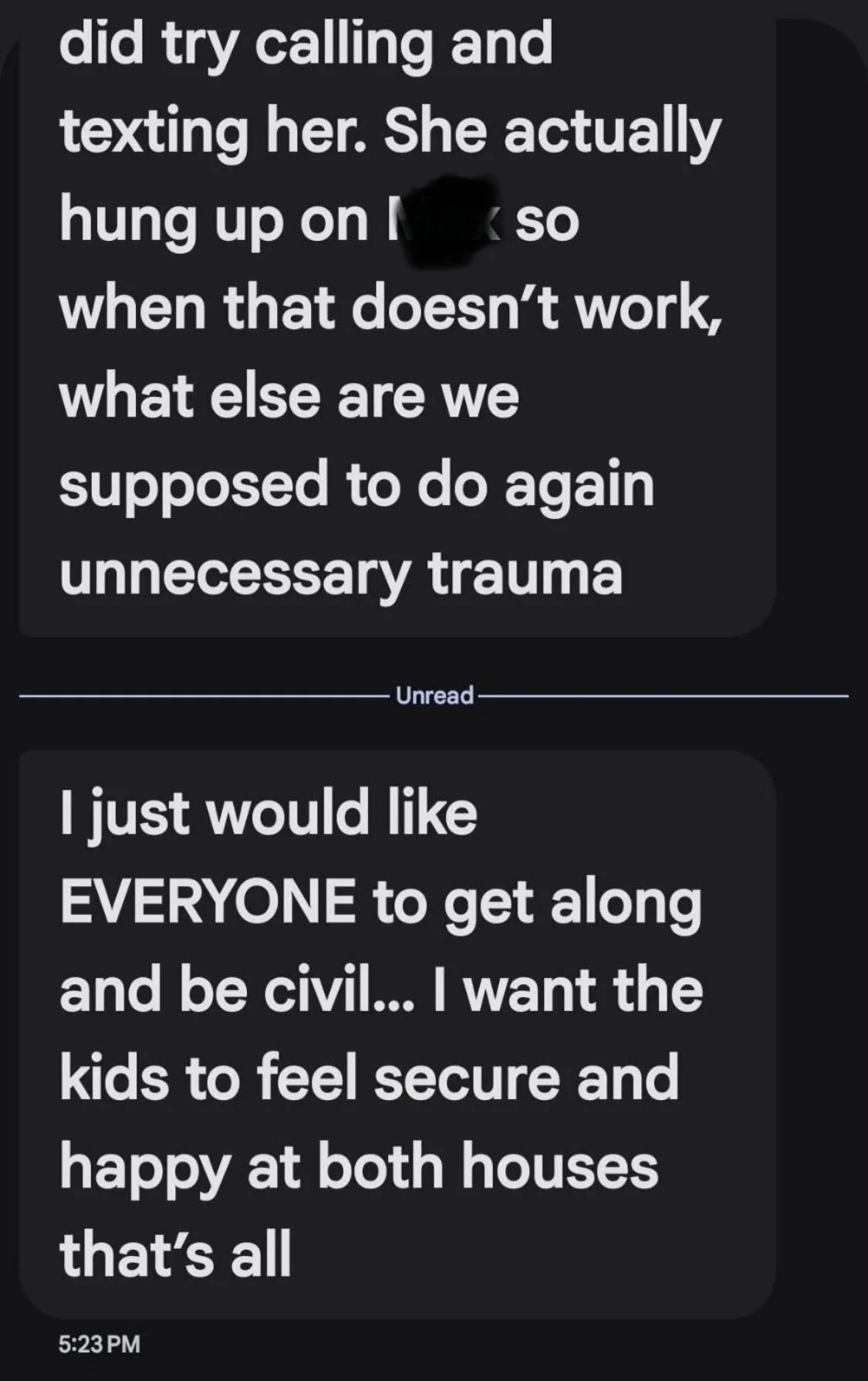
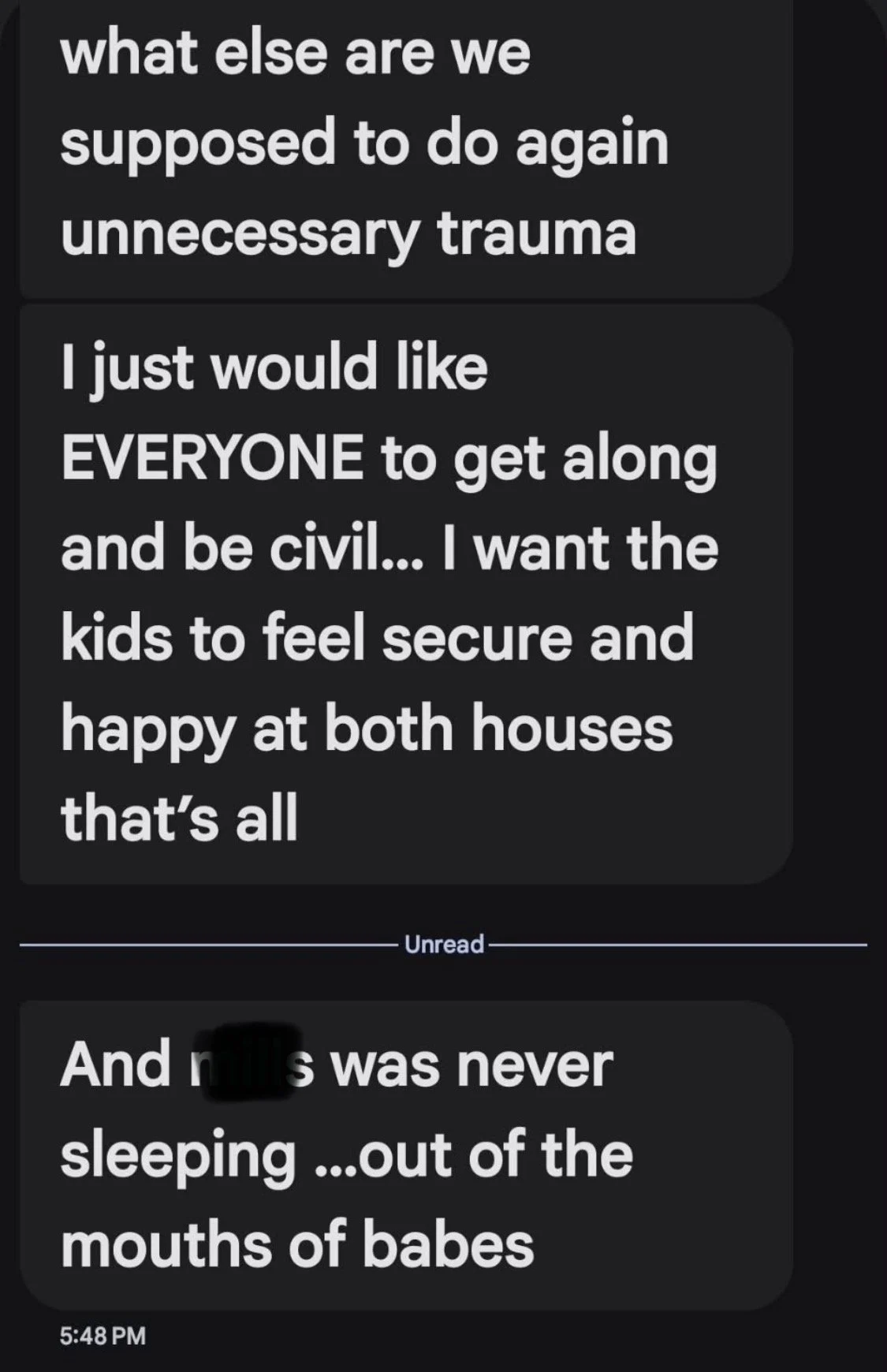
Future exchanges should occur at a police station.
Not because anyone was unsafe.
Not because anyone violated a court order
Not because anyone was denied access.
But because nobody responded quickly enough to a horn.
Imagine explaining that with a straight face.
“We need police-station exchanges going forward.”
“Oh no. What happened?”
“I remained seated in my vehicle and declined to use any of the available methods of communication.”
“Good heavens No! not that!!!”
And this is where the story becomes truly impressive.
Because while the drama lamas were fabricating the imaginary emergency created by an unanswered horn, an actual issue occurred.
My step daughter was supposed to be picked up from the bus at 1:20 p.m.
No call.
No text.
No notice.
No communication whatsoever.
Fortunately, I was home and able to get her off the bus.
Which highlights an important distinction:
An unanswered horn is not a child safety issue.
A child arriving home without the person responsible for picking her up is.
One situation is mildly inconvenient.
The other involves an actual child safety issue.
Yet somehow all energy became focused on solving the mystery of Why Nobody Responded To The Car Horn.
The pattern is familiar:
Create a crisis.
Escalate the crisis.
Become the victim of the crisis.
Position yourself as the peacemaker attempting to solve the crisis.
Involve children.
Repeat children’s statements as evidence.
Declare yourself concerned about everyone’s wellbeing.
Suggest increasingly dramatic solutions to the crisis you created.
It’s impressive, really. A missed bus pickup somehow evolved into a doorbell crisis, a victim narrative, threats of police involvement, angry text messages, and discussions about future exchanges at a police station.
Yet throughout all of it, the two simplest facts remain:
A doorbell was available and apparently too advanced a technology to utilize.
None of this would have happened if my step daughter had simply been picked up from the bus as originally planned.
Maybe the chaos wasn’t the issue at all, the chaos was the distraction. Either way, they’re the only ones buying this fabricated narrative.
So the lesson here isn’t that future exchanges need police stations.
Perhaps the lesson is that before escalating to law enforcement, family-wide panic, and discussions about trauma, we should first exhaust the cutting-edge communication technologies available to us.
Doorbells.
Knocking.
Phones.
Text messages.
And, in truly desperate situations…
opening the front door and saying,
“Amelia?”
The future is now. Use it wisely.
In the meantime, thank you for the comedic blog material. I always appreciate a good laugh.
In fact, laughter is the only reaction your manufactured crises ever seem to generate over here.